The Ford Model T: How One Car Changed the World Forever
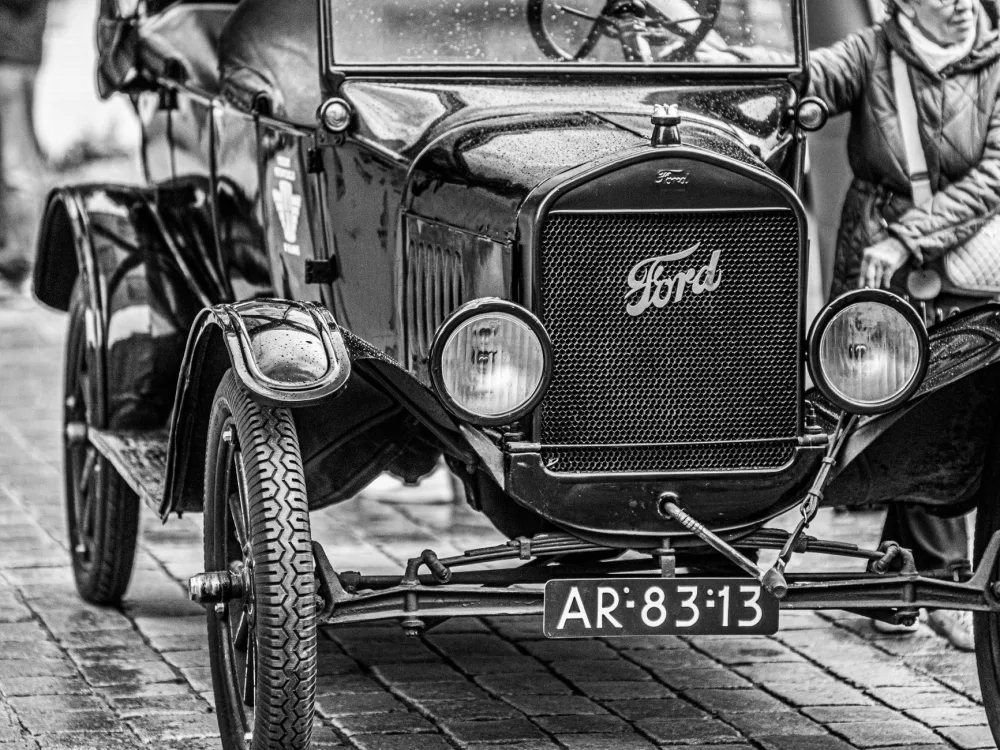
When you think about truly transformative inventions, things that didn't just improve life but fundamentally reshaped society, the Ford Model T absolutely has to be on that list. It's not just a car; it's an icon, a symbol of industrial genius and democratic ambition. I've always been fascinated by how a single product could have such a profound and widespread impact, and for me, the 'Tin Lizzie' perfectly exemplifies that.
We often look back at history and see these grand shifts, but it's rare to pinpoint one machine that kicked off so much change. The Model T, introduced by Henry Ford in 1908, wasn't the first automobile, not by a long shot. But it was the car that made car ownership a real possibility for millions of ordinary folks, not just the wealthy elite. That, I think, is its ultimate legacy, and it's a story worth telling.
Henry Ford's Vision: A Car for the Masses
Henry Ford, the man behind the machine, wasn't just an engineer; he was a visionary with a clear, almost audacious goal. He didn't want to build a better car for the rich. He famously said, and I'm paraphrasing here, that he was going to build a car for the great multitude, a car that would be durable enough for any road, simple enough for anyone to operate, and cheap enough for any person of good salary to own. This wasn't just a business plan; it was a social statement.
Before the Model T, automobiles were handcrafted luxuries, bespoke machines that cost thousands of dollars – an astronomical sum back then. Ford saw the potential for mass production to bring that cost down dramatically, making personal transportation accessible. He wasn't just selling a car; he was selling freedom, convenience, and a new way of life.
Revolutionizing Production: The Assembly Line
Perhaps the most significant innovation wasn't the car itself, but how it was built. Henry Ford, along with his team, perfected the moving assembly line. This wasn't something they invented out of thin air, but they certainly optimized it for automobile production in a way that had never been seen before. Before the assembly line, a single team of skilled workers would build an entire car, taking many hours, sometimes days.
With the assembly line, the process was broken down into small, repetitive tasks. Each worker specialized in one or two specific actions. The chassis would move from one station to the next, and at each stop, another component would be added. This method dramatically cut down production time and, crucially, labor costs. Can you imagine the shift? It was mind-boggling!
- Reduced the time to build a Model T from over 12 hours to roughly 93 minutes.
- Allowed unskilled laborers to perform complex manufacturing tasks effectively.
- Enabled unprecedented economies of scale, making the car much cheaper.
The efficiency gained was incredible. It wasn't just about speed; it was about standardization. Every Model T was essentially identical, which meant parts were interchangeable – a huge benefit for repairs and maintenance. This focus on efficiency and standardization is something we still see shaping modern manufacturing today.
The Model T Itself: Simplicity and Durability
So, what about the car itself? The Model T wasn't flashy. In fact, it was pretty basic by today's standards. It was designed for utility and toughness, made to withstand the often terrible roads of early 20th-century America. It had a simple 2.9-liter, four-cylinder engine that produced about 20 horsepower. That might not sound like much, but it was enough to get the job done.
Operation was also straightforward, though perhaps a bit quirky compared to modern cars. It used a planetary gear transmission, operated by three foot pedals and a hand lever. No clutch pedal or gearstick like we know today! It was designed to be easily maintained, and its high clearance meant it could navigate rough terrain, which was important when many roads were just dirt tracks.
And, of course, there's the famous line: "Any customer can have a car painted any color that he wants so long as it is black." While Ford did offer other colors in earlier and later years, the black-only policy for a significant period during its peak production was a strategic move to optimize drying times and streamline the assembly process even further.
Impact on Society: More Than Just Transportation
The Model T didn't just change how cars were made; it changed America, and eventually, the world. It democratized travel. Suddenly, people weren't tied to their local communities or the railroad schedules. They could visit relatives in other towns, travel for leisure, and commute longer distances to work. This expanded horizons for millions.
Think about the immediate ripple effects:
- Urbanization and Suburbanization: People could live further from their workplaces, contributing to the growth of suburbs.
- Economic Boom: The automobile industry created millions of jobs, not just in factories but in related sectors like gasoline stations, repair shops, and road construction.
- Infrastructure Development: The demand for better roads skyrocketed, leading to massive investments in highway systems.
- Changing Rural Life: Farmers could get their produce to market faster and further, and rural families weren't as isolated. It even powered farm equipment!
- Leisure and Tourism: The idea of the Sunday drive and family vacations by car became a reality for many, giving birth to roadside motels and attractions.
It's incredible to consider how this one machine truly altered the social fabric. It influenced everything from courtship rituals (the car became a private space for young couples) to the layout of cities.
The End of an Era and a Lasting Legacy
The Model T enjoyed a phenomenal run. Over 15 million units were sold from 1908 to 1927, making it one of the best-selling cars of all time. But eventually, even revolutionary products need to evolve. By the mid-1920s, competitors like General Motors were offering cars with more features, more style, and more color options. Consumers wanted more than just basic, affordable transportation; they wanted comfort, speed, and variety.
Henry Ford, initially resistant to changing his winning formula, eventually realized that the market had shifted. Production of the Model T ceased in 1927, making way for its successor, the Ford Model A. It was a difficult decision, shutting down plants for months to retool, but it demonstrated that even the most successful companies need to adapt.
Today, the Model T remains a cultural icon. It represents American ingenuity, the dawn of the automotive age, and the incredible power of mass production. Its influence stretches far beyond the automotive industry, shaping manufacturing practices across countless sectors. When I think about modern life, with our sprawling highway systems, our drive-through restaurants, and our freedom to travel, I can't help but acknowledge the humble Ford Model T for setting so much of it in motion. It truly put the world on wheels, and we're still driving on the roads it helped build.
About Editorial Team
Senior columnist and culture critic specializing in architectural designs, emerging high-growth systems, and contemporary philosophies.
Contact Desk
Have an editorial inquiry or custom partnership idea? Reach our team directly.
Related Dispatches